How to Set Up a Homework Space Your Kids Will Actually Use
The desk, lighting and storage that turn “I can’t find a pencil” into getting it done, in any corner of your home.
This post contains affiliate links. If you buy through them, I may earn a small commission at no extra cost to you. Read the full disclosure.
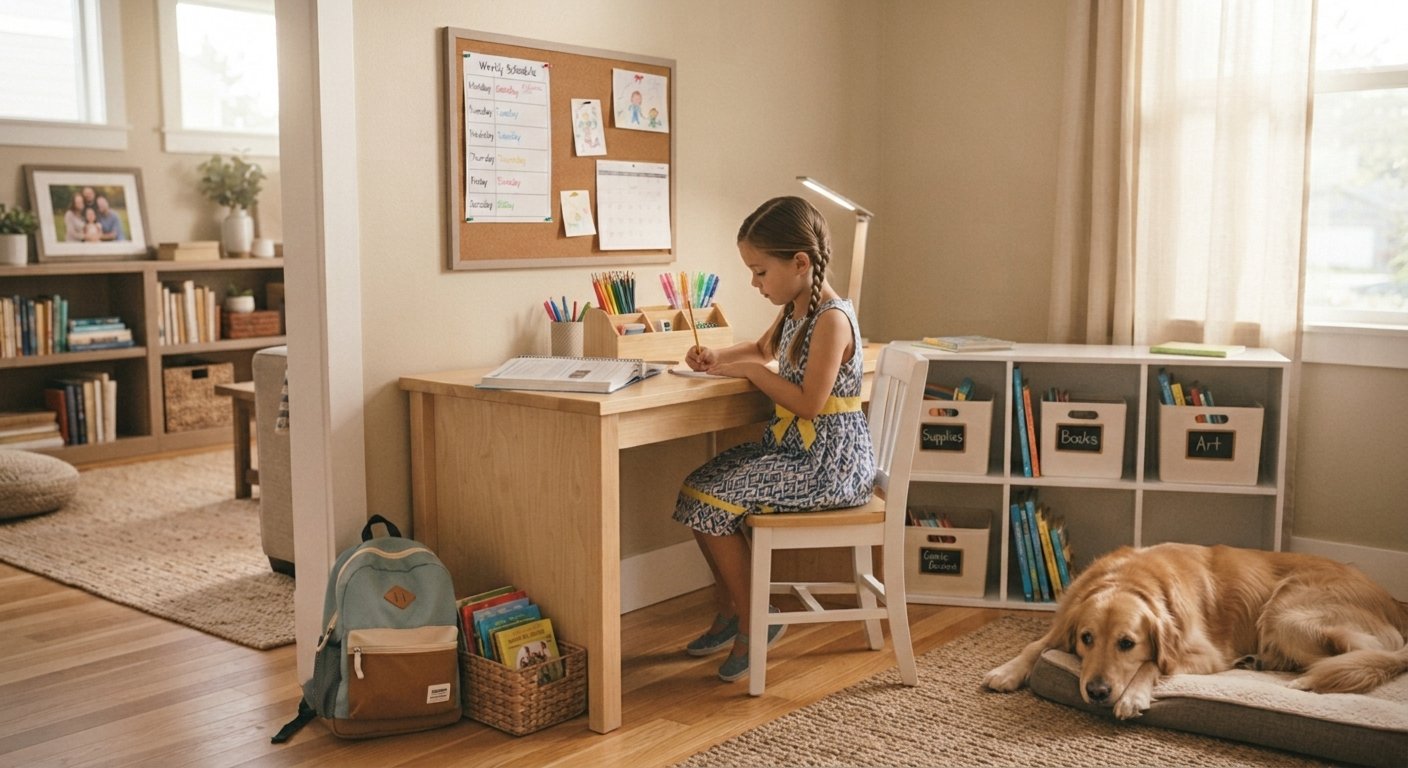
Every year around August, I tell myself this is the year. The year we have a system that sticks for the whole school year. The year my girls come home, sit down, and do their homework without a single argument about where the pencils are. Most years, we truly start off strong. But like most systems, kids like to shift things around.
What I’ve learned, after a lot of trial and a lot of error (and a few years of teaching elementary school), is that it’s not about how much space you have. It’s about how you set up that space. A homework area that actually works has everything a kid needs within reach, feels calm enough to focus in, and, let’s be honest, holds up to some level of chaos.
Here’s how I set ours up, and what’s made the biggest difference.
First: where does the homework actually happen?
Before you buy anything, pay attention to where your kids naturally land after school. Is it the kitchen table? The living room floor? Their bedroom? For a lot of kids, especially younger ones, homework happens best where a parent is nearby. That might mean the kitchen table is actually the right answer, and the dedicated desk in the bedroom is the wrong one. Work with that, not against it.
For the last couple of years, my girls have done their homework at the kitchen island. The key is a supply caddy that moves with them: everything they need, in one portable spot.
What we use: a cream desktop caddy
Four compartments and a fold-down handle on top. Pencils, erasers, and sticky notes each get their own section, and the handle makes it easy to carry from the island to the table (or back to the cabinet when homework’s done). It looks good enough to leave out on the counter, too.
Keep supplies within reach
The number one reason homework dragged on in our house was hunting for supplies. My daughter would sit down, realize she needed crayons in very specific colors, and suddenly twenty minutes had passed digging through our huge crayon bins, and somehow a snack was involved.
The fix was simple: one dedicated supply spot that only gets used for homework and school. Not the junk drawer. Not the art bin. A specific caddy with exactly what they need. In my classroom, every table group had its own supply caddy for the same reason: kids can’t focus when they’re hunting.
What goes in our caddy
- Pencils. Sharpened. Plural. Because they will disappear.
- Erasers. The big block kind, not the tiny cap ones that crumble.
- A ruler. One. That lives there.
- Scissors. Kid scissors and an adult pair.
- Colored pencils or crayons. Enough for projects, but not so many that they’re exploding out of the caddy.
- Sticky notes. Great for bookmarks and reminders, and apparently also for decorating everything.
- Glue sticks. I usually put in two, just in case.
Set up the surface itself
Whether it’s a desk, the kitchen table, or a spot at the island, the surface matters more than people think. A clear, uncluttered space tells a kid’s brain: this is for focus. A few things that have helped us:
A desk pad or mat
It defines the workspace, protects the surface, and adds a layer of cozy without looking like a classroom. When my girls were younger, they loved having their own. This simple non-slip mat rolls up and tucks away when homework is done, and it comes in tan and green, so each kid can pick one.
Good lighting
If your homework spot doesn’t get great natural light in the afternoon, a small desk lamp makes a real difference. Warm light is better than cool: it’s less harsh and feels less clinical. This metal LED lamp has five color settings, from warm to bright white, plus five brightness levels, so you can dial in exactly what works.
A cup of water and a snack. Having them ready saves fifteen “Can I get a drink?” interruptions and just as many “I’m hungry” requests.
Create a launch pad for the next day
This is the part most people skip, and it’s the part that actually makes our mornings smoother.
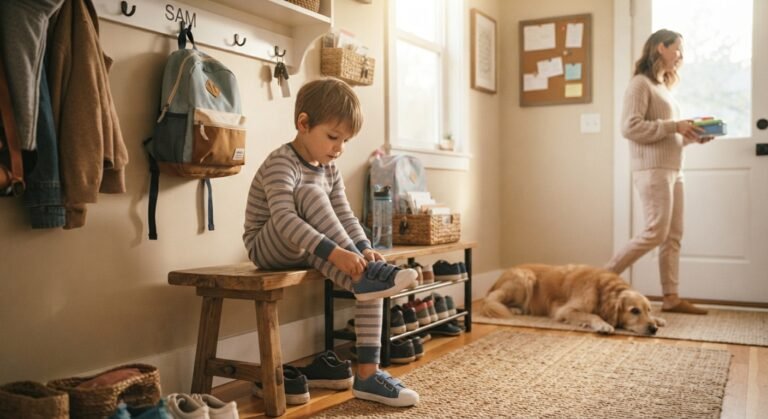
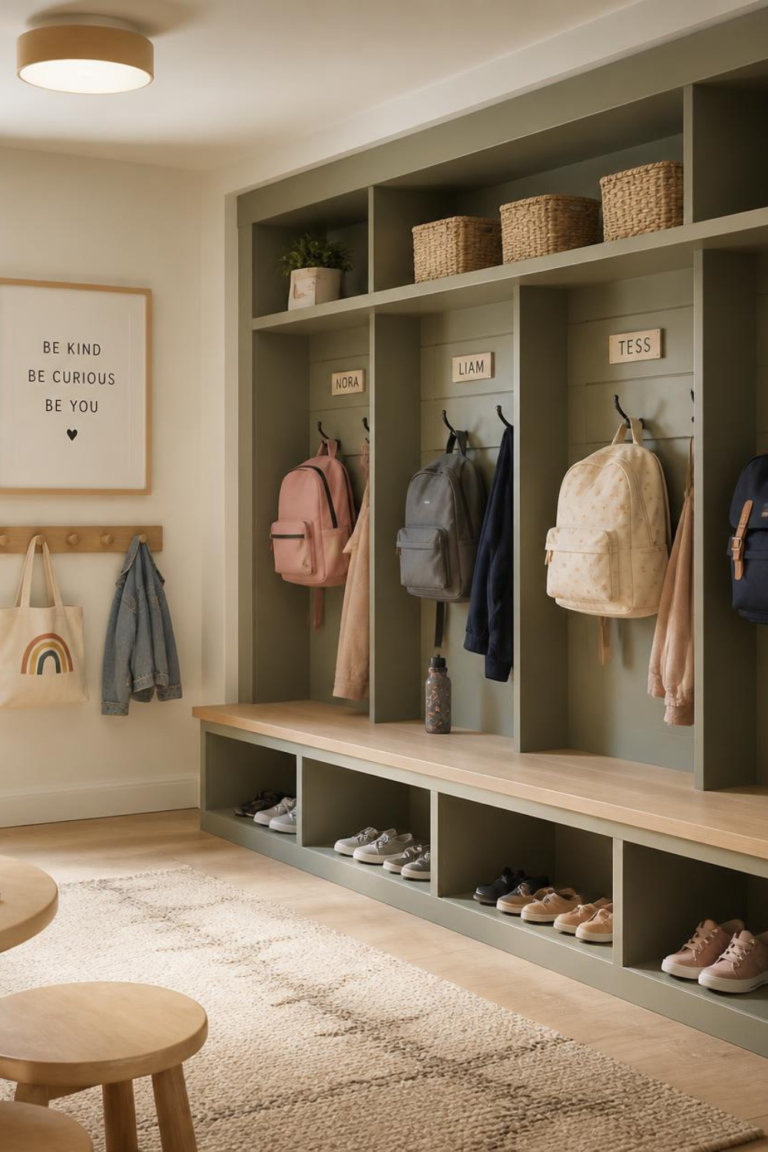
At the end of homework time, my girls don’t just finish. They set up for tomorrow. Homework goes in the folder, the folder goes in the backpack, and the backpack goes to its hook in our backpack drop zone. Permission slips get signed and put back. Library books go in. Anything that needs to go back to school goes in the bag. It takes five minutes, and it saves us at least fifteen minutes of panicked searching every single morning. (It’s also the first step of our teacher-tested morning routine.)
If you have room for a “to return” tray, even better. My girls get a packet on Monday that they work on all week and turn in on Friday, and the tray is the perfect holding spot for it.
What we use: canvas letter trays
A set of two canvas letter trays. Label one “Tonight” and one “Tomorrow,” and every paper has a home.
Make it feel like theirs
This one is less about organization and more about buy-in. When kids feel like a space was set up for them, not just assigned to them, they’re more likely to actually use it. A few low-cost ways to do that:
- Let them pick. Their desk mat color, their pencil cup, their labels. Ownership goes a long way.
- Put their name on their stuff. Labels, stickers, whatever. It’s their space.
- Keep a small “done” tray. When homework is finished, it goes there. Watching the pile grow gives them a real sense of completion.
You don’t need a Pinterest-perfect homework room. You need a corner, a clear surface, a good supply setup, and a habit. Start there and build from it.
The honest summary
A homework space that works isn’t about how it looks. It’s about how little friction there is between a kid sitting down and a kid actually starting. Cut down on the supply hunting. Define the space. Build the end-of-day habit. That’s it. Everything else is just the cozy layer on top, and that part is genuinely fun to put together.
What’s the biggest homework battle in your house right now? Tell me in the comments, and there might be a system fix for it.